Choosing the right Excavator Track Roller in 2026 requires more than comparing prices. Global buyers must match roller design with machine weight, soil conditions, working hours, and service access. A compact excavator working on urban concrete needs different support than a heavy crawler operating in wet clay. Small details matter. Flange height, shell hardness, seal quality, and lubrication capacity can influence uptime.
Undercarriage specialist Daniel Mercer explains, “A roller is cheap only when it survives the job it enters.” His comment reflects a practical purchasing truth. Single-flange rollers may suit lighter excavators and standard undercarriages. Double-flange rollers can improve track guidance under demanding loads. Heavy-duty options often use stronger shells, improved seals, and more resistant bearing systems. However, heavier does not always mean better. An oversized roller may increase cost without solving the real wear problem.
This guide examines the best Excavator Track Roller types for international buyers in 2026. It compares standard, heavy-duty, sealed, single-flange, and double-flange designs. It also considers aftermarket compatibility, operating climate, replacement intervals, and supplier reliability. Product photos can look convincing. Field performance tells more.
Some choices remain uncertain. Manufacturer specifications may not reflect abrasive sand, frozen ground, or constant slope work. Buyers should inspect returned rollers, review warranty terms, and confirm exact machine fitment before ordering. A reliable decision combines technical data with operating experience. That balance helps reduce downtime, uneven track wear, and avoidable replacement costs across different markets.
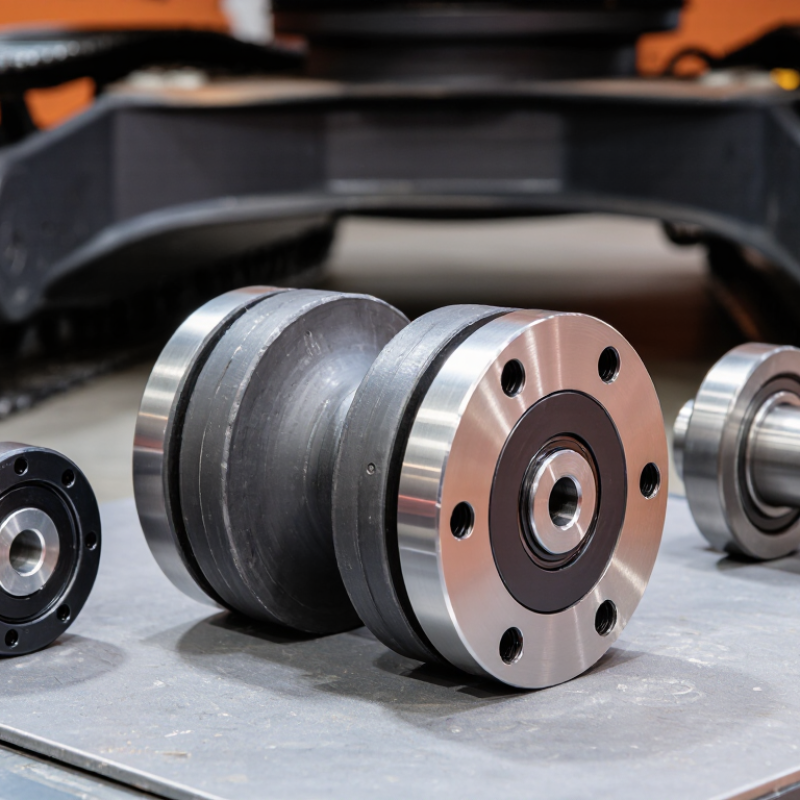
Excavator track rollers support the machine’s weight and guide the track chain along the undercarriage. They transfer shock loads into the frames, especially during digging, grading, and travel. Common designs include single-flange and double-flange rollers. Single-flange rollers suit guiding positions, while double-flange rollers provide stronger lateral control. Sealed, oil-filled rollers normally resist dust and water better than basic grease-filled designs.
The global excavator market was valued at about USD 63.1 billion in 2023, according to Fortune Business Insights’ 2024 Excavator Market report. Such growth increases demand for reliable undercarriage parts, but market size does not guarantee component quality. Buyers should compare roller diameter, flange height, shell hardness, shaft strength, seal design, and operating weight. Small differences matter. A roller with poor sealing may lose lubricant after repeated mud exposure, accelerating bush and track wear.
Field inspections often find uneven wear before total failure. A practical check measures flange damage, oil leakage, abnormal noise, and track sag. The U.S. Department of Energy’s 2023 report on off-road equipment also highlights fuel efficiency as a key operating concern. Excessive undercarriage resistance can increase energy use. However, choosing the cheapest roller is not always economical. Service records, soil conditions, average working hours, and maintenance access should shape the decision. One limitation remains: published market reports rarely separate track roller performance by soil type, so laboratory claims need cautious interpretation.
| Roller Type | Basic Design | Primary Role in the Undercarriage | Typical Excavator Application | Main Advantages | Important Limitations | Global Buyer Selection Checks |
|---|---|---|---|---|---|---|
| Single-Flange Track Roller | One raised guide flange positioned near the center of the roller shell. | Supports the lower track chain while helping guide the track between the front idler and the sprocket. | Compact excavators Mini excavators Light and medium-duty machines |
Lower rolling resistance, comparatively simple installation, and good suitability for narrow undercarriage layouts. | Provides less lateral guidance than a double-flange design when the machine works on slopes or uneven ground. | Confirm the flange position, roller width, mounting-hole pattern, shaft diameter, seal arrangement, and track-chain compatibility. |
| Double-Flange Track Roller | Two raised guide flanges with a central running surface for the track chain. | Supports the track chain and offers stronger lateral control during travel and working operations. | Medium excavators Large excavators Rock and uneven terrain |
Improved track alignment, better resistance to lateral movement, and reliable support under higher operating loads. | Usually heavier and may create additional clearance requirements around the track links and shoe edges. | Check the flange spacing, running-surface width, overall height, weight rating, and clearance with the track shoes. |
| Flangeless Track Roller | A cylindrical running surface without raised guide flanges. | Provides track-chain support where lateral guidance is supplied by other undercarriage components or by the track design. | Special undercarriage layouts Certain crawler machines |
Simple roller profile, reduced flange contact, and suitability for applications requiring a clear running surface. | Limited direct track guidance; incorrect use can increase track wandering and uneven wear. | Use only when the machine manufacturer’s undercarriage design allows it. Verify guide arrangement and chain geometry before ordering. |
| Heavy-Duty Track Roller | Reinforced roller body, shaft, bearings, and sealing system designed for high-load service. | Carries greater machine weight and helps maintain stable track movement during demanding cycles. | Large excavators Mining and quarry work Continuous heavy-duty operation |
Higher load capacity, improved durability under impact, and better resistance to abrasive working conditions when correctly specified. | Higher purchase weight and cost; an oversized roller may not fit the existing frame or track chain. | Compare rated machine class, roller shell thickness, shaft strength, bearing capacity, seal construction, and service environment. |
| Sealed and Lubricated Track Roller | Internal bearing cavity filled with lubricant and protected by floating seals or equivalent sealing elements. | Reduces internal contamination and maintains lubrication for the roller bearing during normal operation. | General-purpose excavators Wet or dusty jobsites Long service intervals |
Better protection against water and dirt than an unsealed arrangement, with reduced routine lubrication requirements. | Seal damage, overheating, or incorrect lubricant can lead to premature bearing failure. | Inspect for oil leakage, seal-lip damage, abnormal heat, and rough rotation. Confirm the correct lubricant and storage conditions. |
| Split- or Serviceable-Bearing Roller | Roller construction designed to allow bearing or internal-component service, depending on the specific design. | Supports the track chain while allowing selected internal parts to be inspected or replaced. | Fleet maintenance programs Remote operating areas Repair-focused applications |
Potentially easier to inspect or rebuild where qualified tools and technicians are available. | Requires correct assembly, controlled cleanliness, and suitable replacement components; poor rebuilding can cause rapid failure. | Ask whether the design is genuinely serviceable, which parts are replaceable, what assembly tools are required, and how warranty conditions apply. |
It supports the machine’s weight and guides the track chain along the lower frame. It also absorbs shock during digging, grading, and travel. Small failures spread quickly.
Single-flange rollers mainly guide the track with lower resistance. Double-flange rollers provide stronger sideways control on uneven ground. The correct choice depends on the undercarriage layout.
They usually resist water, dust, and abrasive sand better than basic grease-filled designs. Seal quality still matters greatly. A poor seal may leak after repeated mud exposure.
Measure roller width, flange position, bolt spacing, and shaft diameter. Compare the roller with the track shoe, not only the machine model. One measurement can prevent misalignment.
Forged alloy steel usually tolerates repeated impacts well. Hardened races resist surface wear and spalling. The inner core must remain tough, because excessive hardness can cause brittle failure.
Check the old roller for oil leakage, deep grooves, flange damage, and side movement. Review hardness data, heat-treatment records, and seal-test results when available. Records may be incomplete.
Wet clay can attack seals and retain mud around the roller. Sharp rock creates strong impact loads. Long-distance travel increases heat, friction, and wear.
Not always. Poor sealing or weak shafts may increase track, bush, and maintenance costs. A cheaper part can become expensive later. I would compare service history, not price alone.
Measure track sag and inspect flange edges regularly. Listen for abnormal noise and look for oil marks. A smooth outer surface does not prove healthy internal bearings.
No. A larger shell may reduce contact stress under heavy loads. Compact machines may need smaller rollers with lower rotating resistance. Bigger is not automatically better.
This guide explains the role of the Excavator Track Roller in supporting the machine’s undercarriage, distributing operating loads, guiding track movement, and maintaining stable travel performance. It introduces common roller types used in different excavator designs, including single-flange, double-flange, and specialized configurations, while highlighting how machine size, track structure, ground conditions, workload, and operating temperature influence selection.
Global buyers will also learn how to compare roller materials, sealing systems, heat treatment, load capacity, surface durability, and manufacturing consistency. The article provides practical guidance on installation, alignment, lubrication, inspection, and routine maintenance to help reduce uneven wear and unexpected downtime. It also discusses purchasing standards, including dimensional accuracy, compatibility checks, quality documentation, packaging, delivery requirements, and supplier communication. By considering both technical performance and total operating cost, buyers can select reliable track rollers suited to their excavator and working environment.

 Vita Construction