Fuel handling is becoming more demanding as workshops, farms, fleets, and mobile equipment depend on reliable diesel and gasoline transfer. The International Energy Agency’s Oil 2024 report projects global oil demand to reach 105.4 million barrels per day by 2029. That scale highlights a practical issue: transferring fuel safely requires more than choosing the highest advertised flow rate.
A dependable Fuel Transfer Pump should match the fuel type, container size, voltage, duty cycle, and operating environment. Diesel users may prioritize steady flow, accurate metering, and resistance to cold-weather thickening. Gasoline users need equipment specifically approved for flammable liquids, with suitable grounding, vapor control, and ignition protection. The U.S. Environmental Protection Agency and OSHA both emphasize controlling fuel vapors and reducing ignition risks during storage and handling.
This list examines ten leading options through practical criteria, including flow consistency, hose quality, filtration, noise, portability, maintenance, and manufacturer support. Small details matter. A stiff hose can slow refueling. A weak inlet filter can restrict performance. An overrated motor may fail under continuous use.
Not every pump fits every job.
The U.S. Energy Information Administration’s Short-Term Energy Outlook also shows how changing fuel markets can influence operating costs and purchasing decisions. However, published specifications are not perfect substitutes for field experience. Users should verify certifications, temperature limits, compatibility, and local requirements before purchase. The best choice is not always the fastest model; it is the pump that delivers controlled, repeatable, and safe performance when conditions become inconvenient.
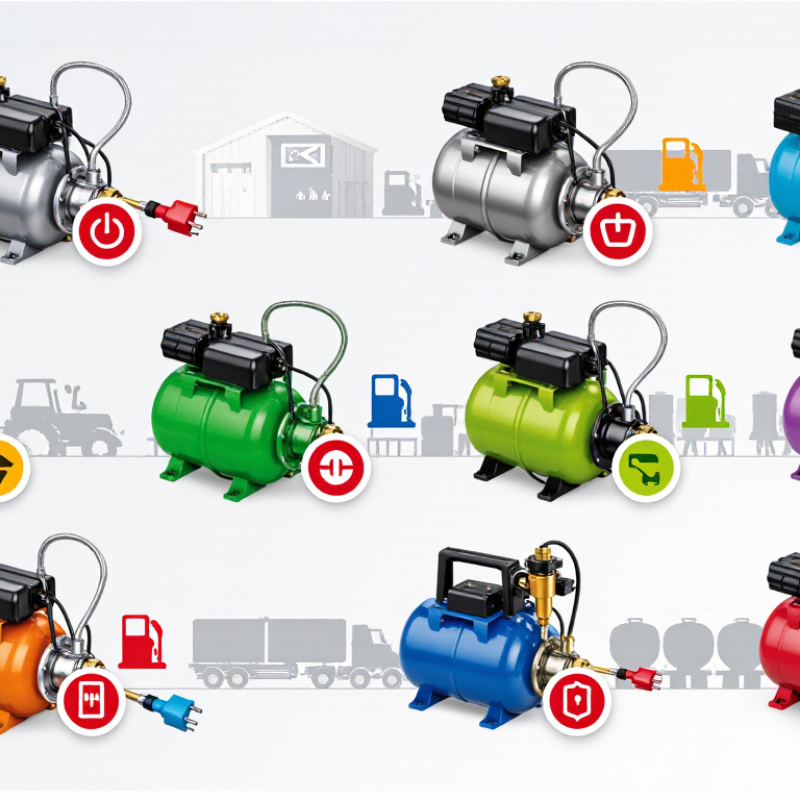
10 Best Fuel Transfer Pumps for Diesel and Gasoline
Diesel and gasoline behave very differently inside a transfer system. Gasoline commonly has a flash point below −20°C, while ASTM D975 sets diesel’s minimum flash point near 52°C. NFPA 30 therefore treats gasoline as a more readily ignitable liquid. Vapor control matters, even during a short refueling task.
Viscosity also changes pump performance. ASTM D975 commonly places diesel viscosity around 2–4.5 cSt at 40°C. Gasoline is much thinner, often near 0.5–1 cSt at the same temperature. A pump designed only for diesel may overheat, leak, or lose prime with gasoline. It may still run. That does not make it suitable.
Check the pump’s written compatibility data before choosing a model. ASTM D471 immersion testing helps evaluate elastomers exposed to fuel. Nitrile can work well with many diesel applications, while ethanol blends may require different seals. Fluorocarbon materials often offer stronger chemical resistance, but they are not automatically compatible with every additive package. Wetted metals matter too. Aluminum, steel, and plated components can react differently over time. Temperature changes complicate the picture. Cold diesel thickens noticeably, while gasoline vaporizes more readily. Select a pump rated for the exact fuel, temperature range, flow rate, and duty cycle. I would also question vague labels such as “fuel compatible.” Detailed data is safer than confident wording.
Choosing among the 10 best fuel transfer pumps requires more than comparing flow rates. Pump design affects durability, noise, priming, and fuel compatibility. Rotary vane pumps are common for diesel transfer because they deliver steady flow and tolerate regular use. Their sliding vanes can wear when fuel contains debris. Clean filtration matters.
Gear pumps use meshing gears to move fuel with consistent pressure. They suit fixed installations and controlled dispensing, but tight internal clearances demand clean fuel. Diaphragm pumps work differently. A flexible membrane creates suction without placing a motor directly in the fuel path. They are useful where simple maintenance and dry-lift capability matter. Flow can feel less smooth. That may affect precise filling.
Electric pumps offer fast, convenient transfer from a battery or approved power source. They often combine compact construction with automatic shutoff features. However, gasoline requires equipment specifically rated for its vapor risk, not merely a pump that handles diesel. Check seals, hose materials, voltage, duty cycle, and grounding instructions before operation. A pump that starts quickly is not automatically the best choice. I have seen oversized units strain small batteries and undersized units overheat during long transfers. That detail is easy to miss. Consider temperature, tank height, daily volume, and filtration before selecting the design. Some comparisons also overlook repair access, which can matter more than peak performance.
Selecting among the 10 best fuel transfer pumps depends on demand, not just advertised power. A 5 GPM pump suits small gasoline tanks, service vehicles, and occasional refueling. At that rate, a 20-gallon tank needs about four minutes, excluding hose and nozzle losses. The U.S. Department of Energy’s Alternative Fuels Data Center identifies flow rate, tank size, and operating cycle as key infrastructure factors. That matches workshop experience: a pump can be technically capable yet frustratingly slow.
For diesel, 10–15 GPM is a practical middle range for farms, fleets, and maintenance yards. A 100-gallon tank takes roughly seven to ten minutes at that output. Higher-demand operations may need 20–30 GPM, especially when several vehicles return during one shift. NREL fueling-infrastructure studies commonly evaluate medium- and heavy-duty diesel service around these higher flow ranges. Still, faster is not always better. Narrow hoses, restrictive filters, long pipe runs, or undersized power supplies can reduce real delivery rates.
Gasoline requires extra attention to vapor control and equipment compatibility. EPA mobile-source data show gasoline remains a major transportation fuel, so light-duty demand is widespread, but that does not justify oversizing every pump. A 30 GPM unit may cycle too aggressively for a small tank and create unnecessary splash, noise, and wear. I have seen published flow claims fall sharply under actual load. Check measured output at the nozzle, not only the pump label. Industry guidance from the Petroleum Equipment Institute also supports routine inspection of hoses, connections, filters, and grounding practices. Small details matter.
Choosing among the 10 best fuel transfer pumps requires more than checking flow rate. Safety compliance must guide the decision. NFPA 30 addresses the storage, handling, and transfer of flammable and combustible liquids. Gasoline demands special attention because its vapors can travel along floors and reach ignition sources. Diesel is less volatile, but it still requires controlled transfer equipment, sound hoses, and leak prevention.
Look for equipment evaluated under UL 79 when petroleum dispensing applications require that standard. UL 79 covers important construction and performance concerns for power-operated petroleum pumps.
ATEX requirements apply in relevant European explosive-atmosphere environments. They classify equipment according to the hazard zone and ignition risk. Do not assume an ATEX marking replaces local installation rules. It does not.
Bonding and grounding are separate protections. Bonding connects conductive parts, such as the tank, pump, and vehicle, to reduce static voltage differences. Grounding provides a controlled path to earth. Use approved conductive cables, clean connection points, and verify continuity with suitable test equipment. Keep the nozzle in contact with the receiving container during transfer. No sparks. A label alone proves very little. Installation quality matters more than a shopping-list specification. Even experienced technicians can overlook a loose clamp, damaged insulation, or an unclassified location. Check the authority having jurisdiction before installation, because regional rules and site conditions may change the correct pump choice.
Choosing among the 10 best fuel transfer pumps requires more than comparing advertised speed. This ranking weighs flow rate, voltage, duty cycle, certification, and total value. High-flow models move diesel quickly, but gasoline service demands compatible seals, wiring, and careful installation. A pump delivering 15 gallons per minute may suit a small workshop, while 30 gallons per minute better serves frequent fleet refueling.
The top three combine steady flow, efficient motors, and dependable thermal protection. Positions four through six offer balanced performance for farms, service vehicles, and backup tanks. Lower-ranked pumps may still perform well, especially when purchase price matters more than speed.
Voltage is critical: 12-volt units fit many vehicle systems, while 24-volt versions suit heavier equipment. Always match the pump to the available electrical supply.
Duty cycle separates occasional-use pumps from equipment built for repeated transfers. A continuous-duty design handles longer sessions with less overheating risk. Certification also deserves close inspection. Look for documentation covering electrical safety, fuel compatibility, and the intended installation environment. Claims can be vague. Verify them directly.
My weighting is practical, not perfect. Flow figures often come from ideal conditions, with short hoses and clean filters. Real output falls when the hose is long or the tank fitting is restrictive. I would rather rank a slower pump with clear documentation above a faster pump with uncertain specifications. Small details matter: an accessible filter, a sturdy switch, and a readable meter can save time beside a dusty tank.
Rotary vane pumps provide steady flow for regular diesel transfer. Gear pumps deliver consistent pressure in fixed installations. Diaphragm pumps support simple maintenance and dry lifting. Electric pumps offer fast transfer from approved power sources. Each design has trade-offs.
It suits frequent diesel transfer in farms, fleets, and maintenance areas. Its sliding vanes can wear when fuel contains debris. Use effective filtration. Clean fuel matters.
Gear pumps maintain consistent pressure during controlled dispensing. They work well in fixed systems. Their tight internal clearances require clean fuel. Small particles may cause problems.
A flexible membrane creates suction without placing the motor directly in the fuel path. This design can support dry lifting and straightforward maintenance. Its flow may feel less smooth. Precise filling can become harder.
A 5 GPM pump often suits small tanks and occasional refueling. A 20-gallon tank may take about four minutes. Hose, nozzle, and filter losses add time. Real output varies.
A 10–15 GPM pump fits many farms, fleets, and maintenance yards. A 100-gallon tank may require seven to ten minutes. Busy operations might need 20–30 GPM. Faster is not always better.
Narrow hoses, restrictive filters, long pipes, and weak power supplies reduce delivery speed. Measure flow at the nozzle, not only at the pump. Labels can disappoint. That assumption needs checking.
Confirm voltage, seals, hose materials, duty cycle, filtration, and grounding instructions. Use equipment specifically rated for the fuel and its vapor risk. A fast start proves little. Safety deserves more attention.
Match the pump to tank height, temperature, transfer volume, and operating frequency. An oversized pump may strain a small battery or cause excess splashing. An undersized pump may overheat during long transfers. I might still underestimate real conditions.
Inspect hoses, connections, filters, shutoff features, and repair access regularly. Repair access may matter more than peak performance. Look closely.
Choosing the right Fuel Transfer Pump requires more than comparing advertised flow rates. Diesel and gasoline differ in flash point, viscosity, and material compatibility, so pump construction must match the intended fuel and operating environment. Rotary vane, gear, diaphragm, and electric designs each offer different advantages in efficiency, durability, priming, and maintenance. Flow rates from 5 to 30 gallons per minute should be matched to tank capacity, vehicle demand, hose length, and available power to prevent wasted energy or unnecessary strain.
This guide ranks ten pump options by flow performance, voltage, duty cycle, certification, safety features, and overall value. It also explains the importance of NFPA 30, UL 79, and ATEX requirements, along with proper bonding and grounding practices. By considering fuel compatibility, installation conditions, operating frequency, and long-term reliability, readers can select a dependable transfer solution for agricultural, commercial, workshop, or fleet applications.

Vita Construction