Choosing the right Hydraulic Filter begins with understanding the system, not simply selecting the finest element available. Hydraulic oil moves through pumps, valves, cylinders, and narrow passages. Each component tolerates contamination differently. A filter that works well in a mobile excavator may perform poorly in a precision injection machine.
Dr. Paul Michael, a respected hydraulic filtration researcher, has stated, “The purpose of filtration is to control contamination before it controls the system.” This principle deserves attention. Filter selection should consider flow rate, pressure, oil viscosity, beta ratio, dirt-holding capacity, and the required ISO 4406 cleanliness level. Manufacturer specifications also matter. They reveal whether the filter can survive pressure pulses, cold starts, and continuous operation.
Small details often decide performance. A return-line filter may protect the reservoir, while a pressure-line filter protects sensitive valves. A suction strainer can prevent pump damage, but excessive restriction may cause cavitation. Watch the indicator. Replace elements before bypass activation becomes normal. That sounds obvious, yet many maintenance teams react only after a pump becomes noisy or a cylinder moves unevenly.
Experience also teaches humility. No filter solves every contamination problem. Poor seals, open reservoirs, dirty service tools, and careless oil transfers can defeat an expensive element. This guide will examine practical selection methods, common errors, and evidence-based maintenance decisions. It will also question one popular assumption: finer filtration is not always better. The correct Hydraulic Filter is the one that protects the system without creating unnecessary restriction, cost, or maintenance burden.
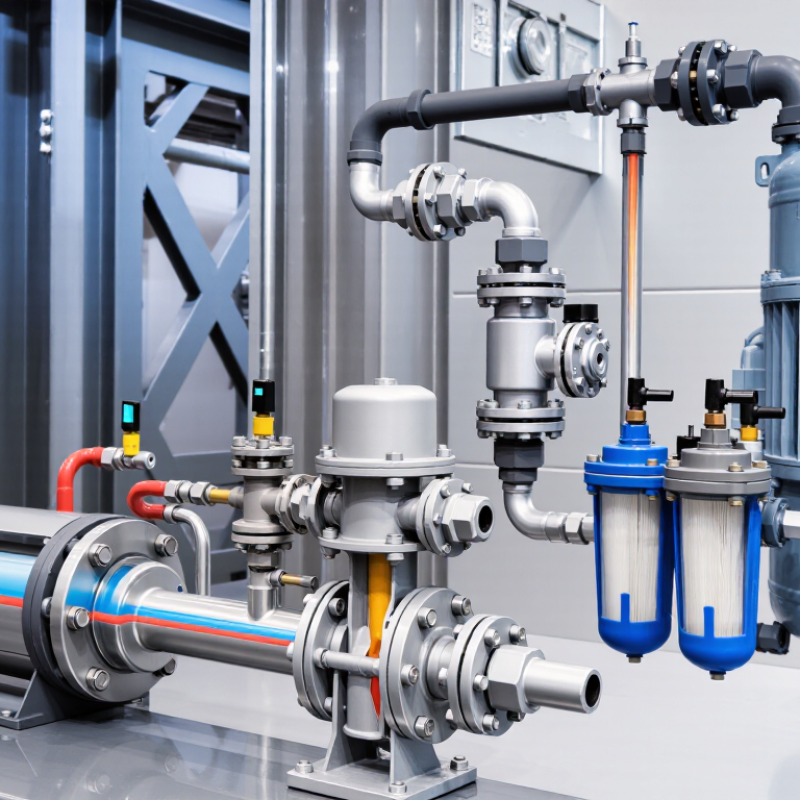
How to Choose the Right Hydraulic Filter?
Understanding Hydraulic Filter Functions and Contamination Control
A hydraulic filter protects pumps, valves, and actuators from damaging particles. Its real function is contamination control, not simply collecting visible dirt. During equipment inspections, I look for the filter’s location, flow direction, and pressure rating. A suction filter protects the pump, while a return filter cleans oil before it re-enters the reservoir. Pressure-line filters provide finer protection for sensitive valves and actuators.
Filter selection should match the system’s flow rate, operating pressure, oil viscosity, and required cleanliness level. A filter with insufficient capacity may create excessive pressure drop. That can trigger a bypass valve or reduce component performance. Check the element’s filtration rating and dirt-holding capacity, not only its external size. Cleanliness targets should be based on component requirements and measured with reliable particle analysis.
Small particles matter.
Water, fibers, and wear metals can also damage hydraulic systems. A clean-looking element may still hide harmful contamination. I have seen operators replace filters without investigating why they blocked early. That approach treats the symptom. Sampling reservoir oil, checking differential pressure, and reviewing maintenance records provide stronger evidence. Filter indicators deserve attention, but they are not perfect. A sensor can fail, and a neglected gauge can mislead. Regular inspections, correct installation, and controlled oil handling usually deliver better protection than choosing the finest filter available.
| Filter Function or Selection Factor | Typical Hydraulic-System Location | Main Contaminant Controlled | Common Filter Rating or Reference | Primary Selection Considerations | Maintenance Indicator |
|---|---|---|---|---|---|
| Reservoir breather filter | Hydraulic reservoir vent | Dust and airborne moisture entering during fluid-level changes | Commonly 3–10 µm air filtration; desiccant breathers may also control moisture | Match airflow capacity to reservoir breathing demand and protect the element from direct water exposure | Replace when loaded, damaged, or moisture-absorbing media is exhausted |
| Suction strainer | Pump inlet or inside the reservoir | Large particles that could cause catastrophic pump damage | Often approximately 60–150 µm; coarse protection is used to limit inlet restriction | Keep pressure drop low to reduce cavitation risk; do not use a fine element where pump inlet flow is restricted | Inspect for blockage and abnormal inlet vacuum or pump noise |
| Pressure-line filter | Downstream of the pump and before sensitive components | Particles generated by the pump or remaining in the fluid before valves and actuators | Commonly 3–10 µm absolute, selected according to component cleanliness requirements | Verify housing pressure rating, flow capacity, cold-start viscosity performance, and bypass-valve setting | Use a differential-pressure indicator or switch; replace before the bypass valve opens |
| Return-line filter | Return circuit before fluid re-enters the reservoir | Wear particles produced by cylinders, motors, valves, and hoses | Commonly 5–25 µm absolute, depending on the required cleanliness level | Size for maximum return flow, including accumulator discharge and thermal expansion; account for intermittent flow peaks | Monitor differential pressure and check for element collapse or excessive restriction |
| Offline kidney-loop filter | Separate filtration circuit connected to the reservoir | Fine particles and, with suitable media, water in stored or circulating oil | Often 3–10 µm absolute; water-removal media is application-specific | Provides continuous or scheduled cleaning without adding main-line pressure drop; verify compatible flow and fluid temperature | Track differential pressure, particle counts, and water content where applicable |
| High-efficiency servo or proportional-valve protection | Pressure or dedicated control-line circuit immediately upstream of sensitive valves | Fine abrasive particles that can cause spool wear, sticking, and loss of control accuracy | Frequently 3–5 µm absolute, subject to the component manufacturer's cleanliness specification | Prioritize high dirt-holding capacity, stable beta performance, low pressure drop, and reliable bypass protection | Replace based on differential pressure and verify cleanliness with periodic fluid analysis |
| Water-absorbing or water-separating element | Offline circuit, return line, or reservoir service unit | Free water and, depending on the design, some emulsified water | No universal micron rating; water-removal performance must be stated separately from particle filtration | Confirm compatibility with the hydraulic fluid, water concentration, flow rate, and required dryness level | Monitor water content, element saturation, and filter differential pressure |
| Magnetic element or magnetic pre-separator | Reservoir, return line, or filter housing | Ferrous wear debris, such as steel particles | Particle capture depends on magnetic field strength and particle characteristics; it is not a substitute for a rated filter element | Use as supplementary protection and retain conventional filtration for non-ferrous and non-magnetic contamination | Clean and inspect the magnetic surface during scheduled maintenance |
It controls contamination and protects pumps, valves, and actuators from damaging particles. Small particles matter. Visible cleanliness can mislead.
Suction filters protect pumps, return filters clean oil before reservoir entry, and pressure filters protect sensitive components. Location changes the risk. A poorly placed suction filter may starve the pump.
Match the filter with system flow, operating pressure, oil viscosity, and required cleanliness. Check more than external dimensions. Review filtration rating, dirt capacity, and pressure drop.
A very fine element may restrict flow, especially during cold starts. Pressure drop can trigger bypass operation. I would leave practical flow margin.
A micron rating describes particle size performance, but nominal and absolute ratings can differ greatly. The number is not universal. Check the test conditions behind it.
Beta ratios describe how effectively a filter removes particles at a defined size. A beta ratio of 1,000 indicates 99.9% removal in that test. Field conditions may differ.
Take reservoir samples and use particle analysis for reliable cleanliness information. Inspect differential pressure and maintenance records too. A clean-looking filter proves little.
Investigate contamination sources instead of replacing the element repeatedly. Check water, fibers, wear metals, installation, and oil handling. Replacement alone treats the symptom. I might miss the original cause.
Choose sufficient bowl volume, clear access, dependable bypass indication, and pressure capability suitable for the installation. Review pressure-drop trends after installation. Compact is not always better.
Choosing the right Hydraulic Filter is essential for protecting hydraulic components, maintaining system efficiency, and reducing unexpected downtime. The selection process begins with understanding how contamination affects pumps, valves, actuators, and other sensitive parts. Different filter types should be matched to the system’s pressure, flow rate, installation requirements, and level of cleanliness. Micron ratings indicate the size of particles captured, while beta ratios help measure filtration efficiency under defined conditions. Flow capacity must also be sufficient to prevent excessive pressure drop and restricted performance.
The filter’s location, such as the suction, pressure, return, or offline circuit, should suit the system’s design and protection priorities. Housing construction must withstand operating pressure and allow practical access for inspection and replacement. Before making a final choice, confirm fluid and material compatibility, seal suitability, temperature range, maintenance intervals, and environmental conditions. A well-matched filter supports reliable operation, extends component service life, and helps maintain consistent hydraulic performance.

 Vita Construction