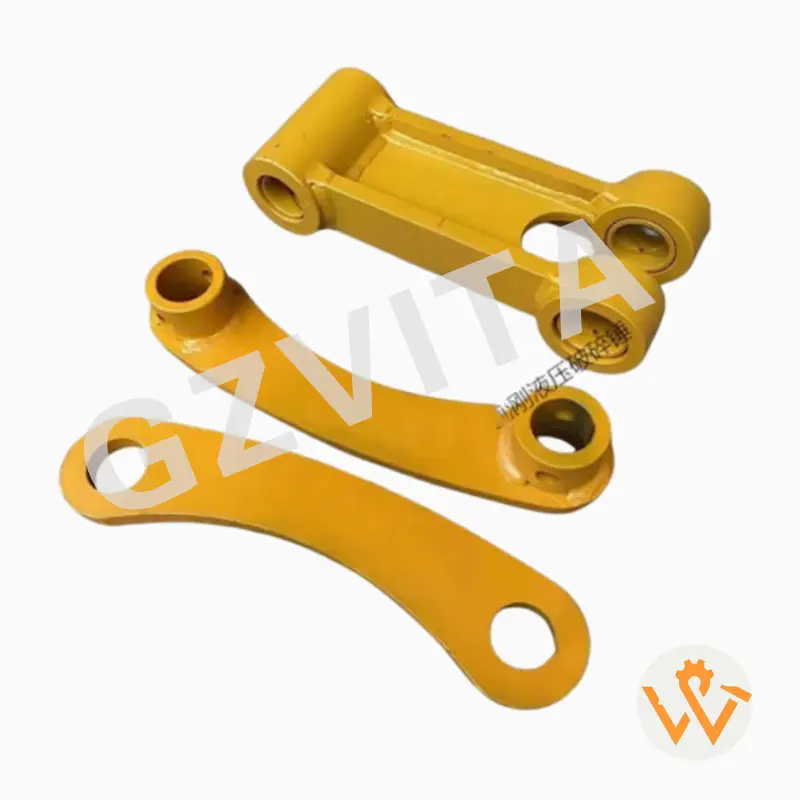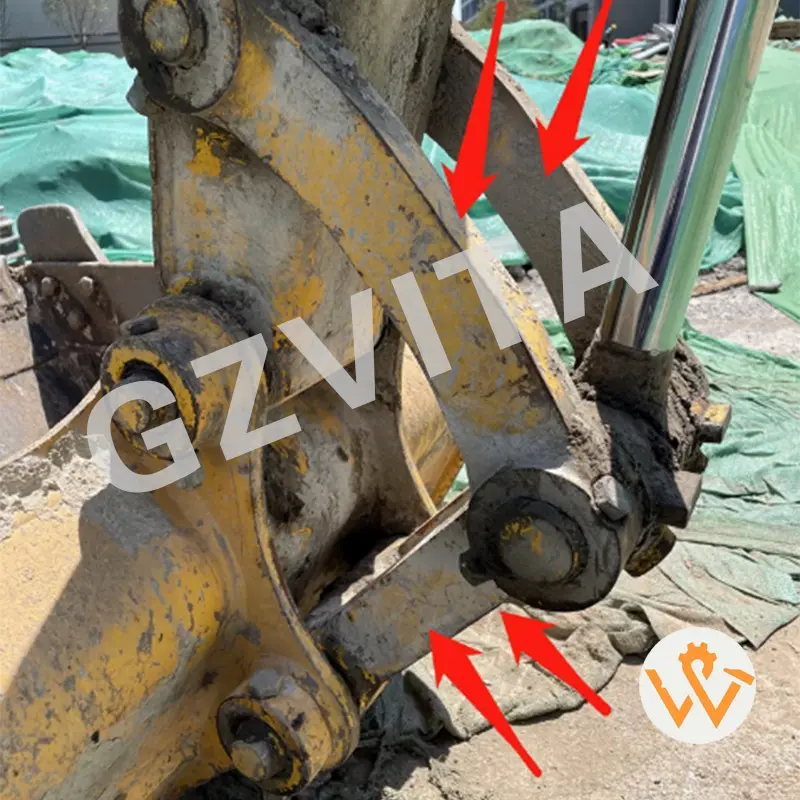
Custom Top Quality Excavator Parts for Komatsu PC60 PC70 PC75 H-frame Connecting Rod Bucket H Link201-70-D4170 201-70-D4160 Supplier, Factory

Main structural backbone – Connects the upper structure to the undercarriage.

Torsional rigidity provider – Resists twisting forces during digging and lifting.

Load distribution center – Transfers working loads from the front attachment to the tracks.

Swing bearing mounting platform – Supports the swing bearing and upper structure.

Hydraulic component foundation – Provides mounting points for pumps, valves, and tanks.

Counterweight support – Bears the weight and inertia of the counterweight.

Operator cab anchor point – Forms the rigid base for the cab mounting.

Engine and transmission support – Cradles the powertrain components.

Track frame connection interface – Links to the track frames via bolts or welds.

Shock absorption structure – Helps dampen operational impacts.

Machine alignment reference – Maintains parallelism between track frames.

Central fuel/tank support – Often supports the main fuel and hydraulic tanks.

Ground clearance determinant – Its height defines the machine's minimum clearance.

Service platform – Provides a stable base for maintenance activities.

Weight distribution balancer – Centralizes mass for stability.

Bucket movement control – Connects the boom/arm to the bucket for curling/dumping.

Mechanical force multiplication – Amplifies hydraulic cylinder force for digging.

Parallel lifting mechanism – Maintains bucket angle during lifting (in certain designs).

Load transfer path – Transfers digging forces from the bucket to the boom and frame.

Attachment interface – Provides pivot points for quick couplers or specialized tools.

Kinematic motion guide – Determines the bucket's digging and dumping trajectory.

Operator feedback provider – Gives the operator a "feel" of the digging resistance.

Wear component localization – Concentrates wear on replaceable pins and bushings.

Safety link – Designed as a weaker point to protect more expensive components.

Bucket positioner – Holds the bucket in a fixed position when cylinders are locked.

Shock transmission medium – Transmits impact loads from the bucket to the frame.

Quick-change adaptation – Allows for different bucket types and sizes.

Mechanical advantage adjustment – Different linkage geometries change force/speed ratio.

Structural redundancy – Shares loads across multiple pivot points.

Visual operation indicator – Its movement clearly shows the bucket's action to the operator

Product Description

Introduction to Swivel Joint Assembly on an Excavator

A swivel joint assembly is a critical component in excavators, particularly in hydraulic systems. It allows for the transfer of hydraulic fluid between stationary and rotating parts of the machine, enabling smooth and efficient operation. Here's an overview of the swivel joint assembly, its function, and its importance in excavator operations.

What is a Swivel Joint Assembly?

A swivel joint assembly consists of a series of interconnected components that allow for rotational movement while maintaining a fluid connection. It typically includes:

Swivel Joint

The main component that allows for rotation. It usually has a cylindrical shape and is designed to handle high pressures.

Seals

These prevent hydraulic fluid from leaking out of the joint and protect against contaminants entering the system.

Bearings

Some swivel joints may include bearings to facilitate smooth rotation and reduce friction.

Hydraulic Ports

These are openings through which hydraulic fluid enters and exits the joint.

Function of the Swivel Joint Assembly

Fluid Transfer

The primary function of the swivel joint is to transfer hydraulic fluid from the stationary part of the excavator (like the chassis) to the rotating parts (like the boom or arm) without causing leaks or interruptions in flow.

Rotational Movement

The swivel joint allows for the necessary rotational movement of the excavator's components, enabling the machine to perform various tasks, such as digging, lifting, and swinging.

Flexibility

It provides flexibility in movement, allowing the excavator to operate in tight spaces and perform complex maneuvers.

Importance of the Swivel Joint Assembly

Operational Efficiency

A well-functioning swivel joint assembly is crucial for the overall efficiency of the excavator. It ensures that hydraulic power is effectively transmitted to the working components, allowing for smooth operation.

Durability and Reliability

High-quality swivel joints are designed to withstand the harsh conditions of construction sites, including exposure to dirt, debris, and extreme temperatures. This durability is essential for minimizing downtime and maintenance costs.

Safety

Properly functioning swivel joints help prevent hydraulic leaks, which can pose safety hazards to operators and other personnel on the job site.

Maintenance Considerations

To ensure the longevity and reliability of the swivel joint assembly, regular maintenance is essential. This may include:

Inspection

Regularly checking for signs of wear, leaks, or damage.

Lubrication

Ensuring that seals and bearings are adequately lubricated to reduce friction and wear.

Replacement

Timely replacement of worn or damaged components to prevent failure during operation.
Frequently Asked Questions (FAQ)

What does an excavator swivel joint assembly do?
It transfers hydraulic fluid between the stationary chassis and the continuously rotating upper cabin structure of the excavator, enabling movement without twisting or breaking hydraulic hoses.
What are the main components of a swivel joint?
The assembly typically consists of the central swivel joint body, dynamic seals to prevent leaks, bearings to ease rotational friction, and hydraulic ports for fluid flow.
Why is proper maintenance critical for the assembly?
Regular maintenance prevents fluid leaks, preserves pressure levels, reduces wear on internal components, and ensures operator safety while minimizing machine downtime.
How often should you inspect the swivel joint?
It should be inspected during routine excavator maintenance schedules, primarily checking for leaks, wear on seals, and checking if lubrication is sufficient.
Can a failing swivel joint assembly impact excavator safety?
Yes, dynamic failures can cause high-pressure hydraulic leaks, resulting in loss of control of key operations and posing fire or physical hazards to the worksite.

Related Products