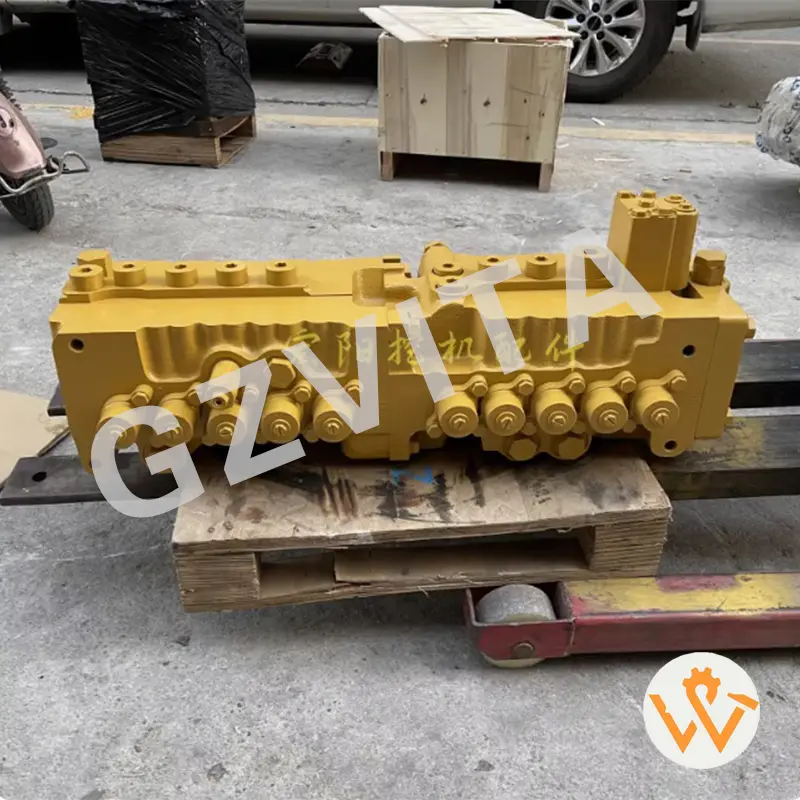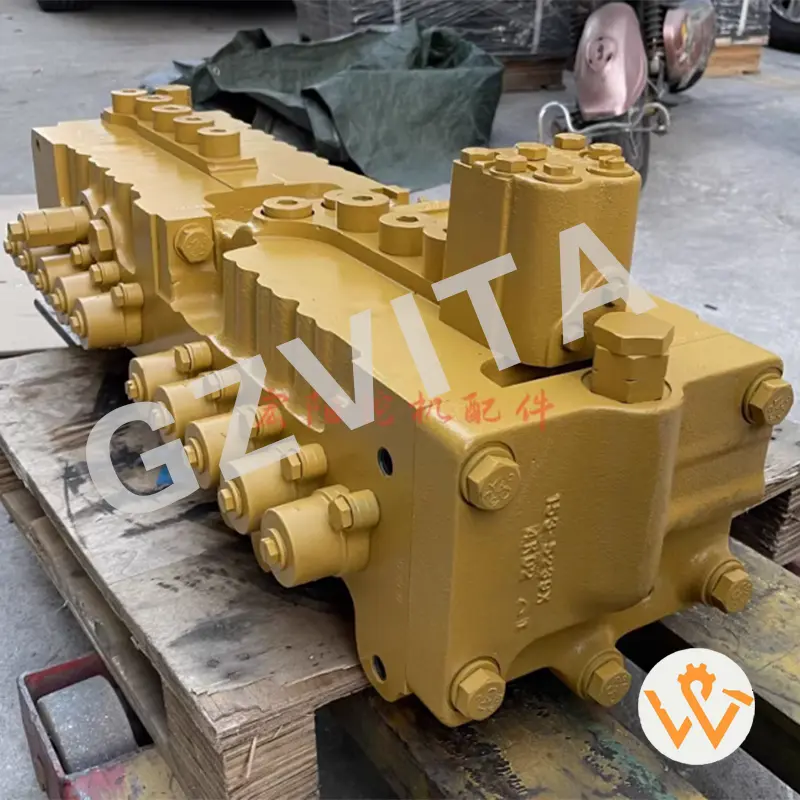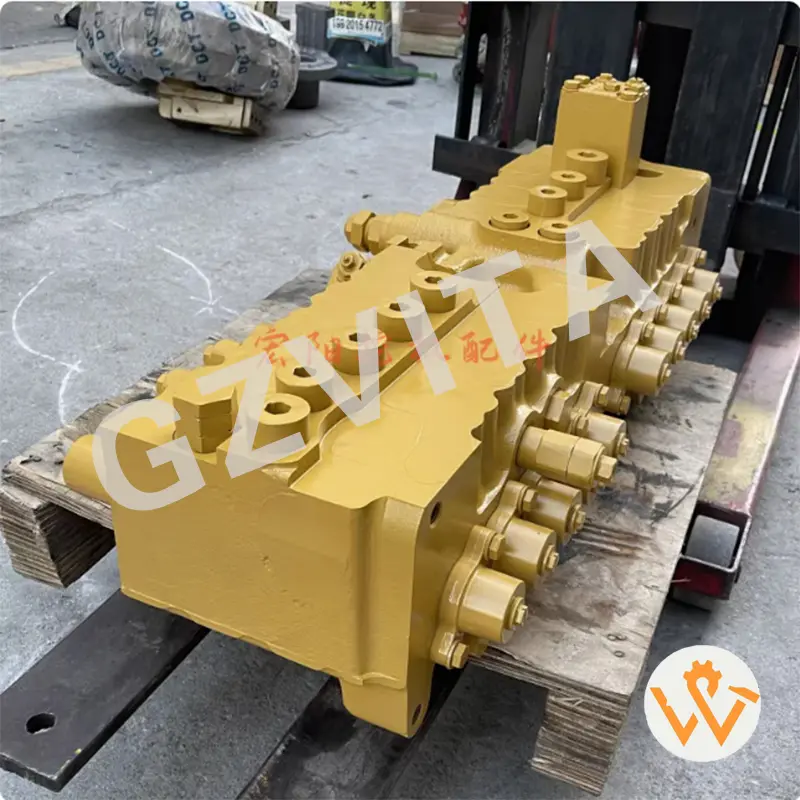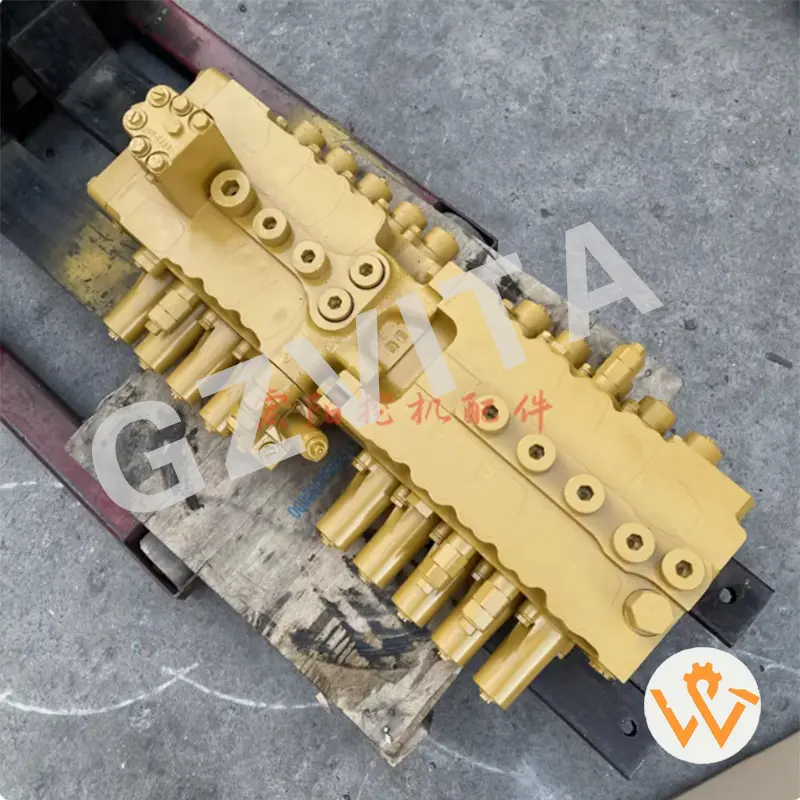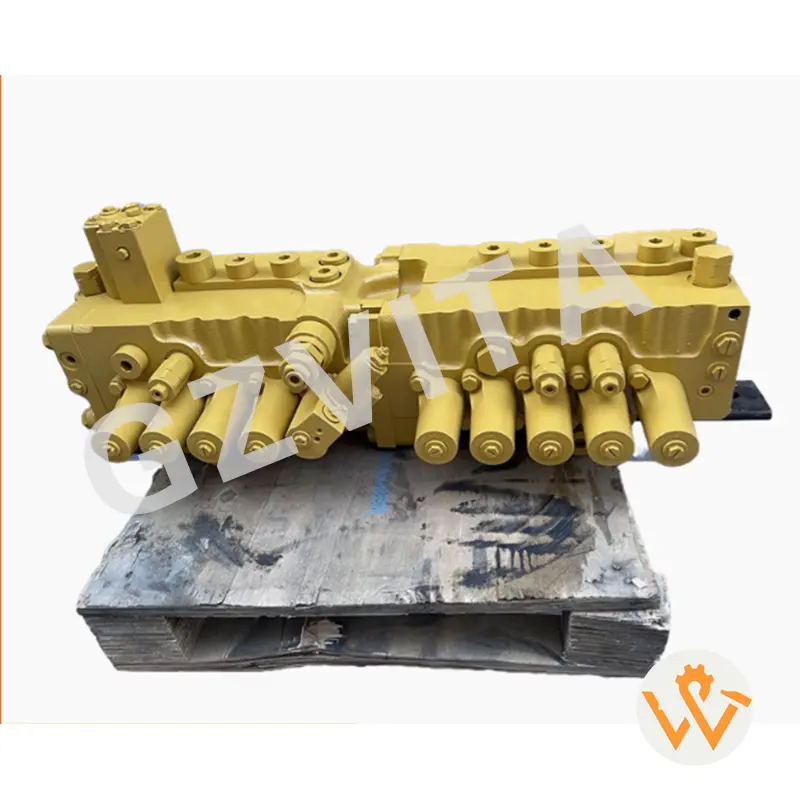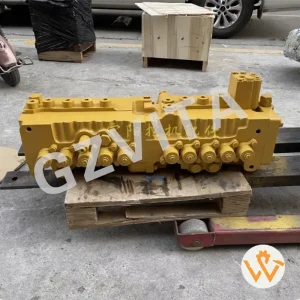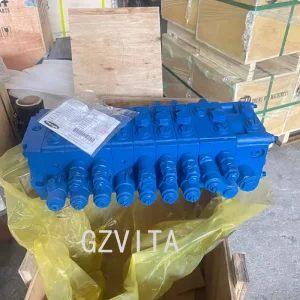
High-Quality E320 320 E323 323 E325 325 E329D Excavator Control Valves Distribution Valve , 259-7464 255-5680 255-5683 Distribution valve Assembly Suppliers, Company

Main hydraulic control valve – Directs system flow to all implement functions.

Load sensing system integration – Works with pumps to deliver demand-based flow.

Parallel hydraulic circuit design – Allows simultaneous operation of multiple functions.

Pressure-compensated spool design – Maintains consistent speed under varying loads.

Pilot-operated valve control – Uses low-pressure signals for precise valve actuation.

Independent metering capability – Manages oil flow to both sides of cylinders independently.

Boom regeneration circuit – Improves boom lowering speed and efficiency.

Arm regeneration circuit – Enhances arm retraction speed and energy savings.

Swing priority function – Diverts flow to swing during combined operations.

Attachment flow control – Regulates oil to auxiliary hydraulic circuits for tools.

Anti-cavitation valves – Prevents vacuum formation in cylinders.

Cross-line relief valves – Protects circuits from shock loads during abrupt stops.

Make-up valve function – Supplies oil to prevent vacuum during fast cylinder movement.

Fine control characteristics – Allows precise movements for grading and finishing.

Detent mechanism – Holds valves for continuous operation (e.g., for travel or hammer).

Neutral bypass passage – Directs unused pump flow back to tank with minimal pressure.

Port relief valves – Protect individual cylinders from overpressure.

Load check valves – Hold cylinder positions when levers are in neutral.

Stackable modular design – Simplifies maintenance and function expansion.

Cast iron or ductile iron body – Provides durability and pressure resistance.

Hardened steel spools and sleeves – Ensures long service life with minimal leakage.

Integrated test ports – For system diagnostics and pressure measurement.

Float function capability – Allows attachment to follow ground contours.

Return line to hydraulic tank – Channels spent oil back for cooling and filtration.

Compatibility with load-sensing pumps – Forms efficient closed-center system.

Shock absorption design – Reduces hydraulic hammer during valve shifting.

Multi-function parallel operation – Enables smooth combined movements.

Electronic control interface option – For advanced models with electronic controls.

Proportional priority control – Adjusts flow distribution based on demand.

Core hydraulic management component – Essential for all digging, lifting, and swing operations.

Product Description

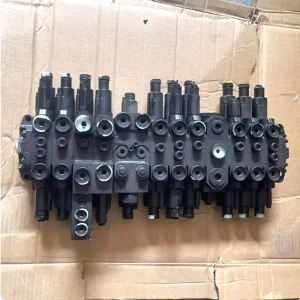
The distribution valve assembly for JCB equipment is an essential component in the hydraulic system, responsible for directing hydraulic fluid to various functions of the machine, such as the boom, bucket, and other attachments. Here are the key components typically found in a JCB distribution valve assembly:

Valve Body

The main housing that contains the internal components and passages for hydraulic fluid.

Spool Valves

These are movable components within the valve body that control the flow of hydraulic fluid to different circuits. They can be shifted to direct fluid to specific functions.

Actuators

These components are used to operate the spool valves, often controlled by levers or joysticks in the operator's cab.

Seals and O-rings

These are used to prevent hydraulic fluid leaks and maintain pressure within the system.

Ports and Connectors

These are the entry and exit points for hydraulic fluid, connecting the distribution valve to the hydraulic lines leading to various machine functions.

Pressure Relief Valve

This component helps protect the hydraulic system from excessive pressure by diverting fluid back to the reservoir when necessary.

Return Line

A pathway for hydraulic fluid to return to the reservoir after it has completed its work.

Mounting Bracket

This secures the distribution valve assembly to the machine frame.

Frequently Asked Questions
What is the main function of the JCB distribution valve assembly?

The distribution valve assembly acts as the control center of the hydraulic system, precisely directing hydraulic fluid to operate different attachments such as the bucket, boom, and other auxiliary tools.

How do the spool valves control the fluid flow?

Spool valves are internal movable components. When shifted via cab-mounted controls or actuators, they align specific passages to route pressurized fluid directly to the desired hydraulic circuit.

Why is the pressure relief valve important in the assembly?

The pressure relief valve is a safety mechanism that prevents system overload. It automatically channels excess fluid back to the reservoir if the system pressure exceeds safe operational limits.

What role do seals and O-rings play in the valve?

Seals and O-rings block hydraulic fluid from leaking out of the valve body and maintain crucial internal pressure so the machinery functions efficiently without loss of power.

How are the internal valves operated by the machine user?

The internal spool valves are operated by actuators, which respond to the control levers, joysticks, or buttons managed by the operator inside the driver's cab.
Related Products