 Vita Construction
1 / 5
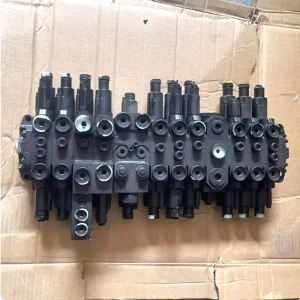
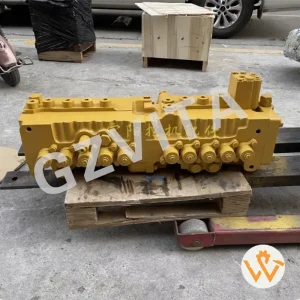
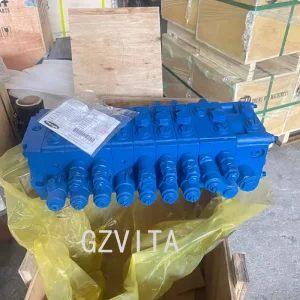
The main housing that contains the internal components and passages for hydraulic fluid.
These are movable components within the valve body that control the flow of hydraulic fluid to different circuits. They can be shifted to direct fluid to specific functions.
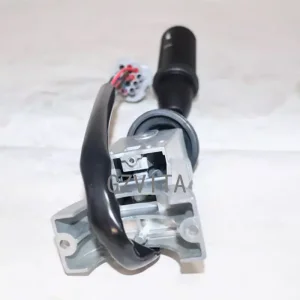
These components are used to operate the spool valves, often controlled by levers or joysticks in the operator's cab.
These are used to prevent hydraulic fluid leaks and maintain pressure within the system.
These are the entry and exit points for hydraulic fluid, connecting the distribution valve to the hydraulic lines leading to various machine functions.
This component helps protect the hydraulic system from excessive pressure by diverting fluid back to the reservoir when necessary.
A pathway for hydraulic fluid to return to the reservoir after it has completed its work.
This secures the distribution valve assembly to the machine frame.
It functions as a central control unit in the hydraulic system, directing pressurized fluid to different operational parts of the machine, such as the boom, bucket, and attachments.
Spool valves are movable parts inside the main body that slide to open or close specific channels, thereby regulating the direction of fluid flow to control different machinery movements.
It serves as a safety mechanism that redirects excess hydraulic fluid back to the reservoir, preventing over-pressurization and protecting system components from damage.
The return line provides a safe path for hydraulic fluid to travel back to the reservoir after performing its mechanical work, completing the hydraulic cycle.
High-quality seals and O-rings are installed throughout the assembly to prevent fluid from escaping, ensuring the system maintains correct working pressures.